File:Earth in Human Hands.jpg
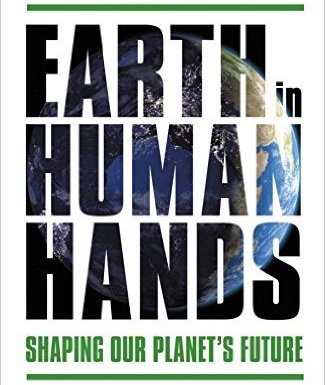
Earth_in_Human_Hands.jpg (325 × 385 pixels, file size: 34 KB, MIME type: image/jpeg)
Earth is in *Your Hands
- Earth in Human Hands

From Clearwater, Florida
GreenPolicy360 Siterunner:
Trendlines, we are looking at trendlines today.
We are observing data changing, dynamically, as time passes.
We need to consider change with care and have perspective.
We need to look closely, to see facts, connections & ecosystems.
We need to navigate with knowledge and foresight as we travel forward.

🌎
NASA, in its original mission statement, speaks of our home planet and of science. We have responsibilities together on 'Spaceship Earth'. We, at GreenPolicy360, agree.
GreenPolicy360 believes in personal responsibility to manage wisely. We are planet citizens and Planet Earth is in human hands.
NASA Origins with a Planet Earth Mission
NASA: From its origins, NASA has studied our planet in novel ways, using ingenious tools to study physical processes at work—from beneath the crust to the edge of the atmosphere. We look at it in macrocosm and microcosm, from the flow of one mountain stream to the flow of jet streams. Most of all, we look at Earth as a system, examining the cycles and processes — the water cycle, the carbon cycle, ocean circulation, the movement of heat — that interact and influence each other in a complex, dynamic dance across seasons and decades.
For all of the dynamism and detail we can observe from orbit, sometimes it is worth stepping back and simply admiring Earth. It is a beautiful, awe-inspiring place, and it is the only world most of us will ever know.
Planet Earth, a NASA Mission Statement with initiatives and programs that are 'First Up' and 'Top of Mind'
“To understand and protect our home planet; to explore the universe and search for life; to inspire the next generation of explorers ... as only NASA can.”
🌎
GRN360: Together we are guiding our home Planet Earth into the future. We are delivering a legacy to future generations.
We, all of us, have entered a climate crisis and one of GreenPolicy360's greatest concerns is global climate change, as all our readers and sharers know. The scientific Earth Science studies we set in motion a half century ago are returning their results. We are looking at this data, studying it, observing trendlines into the future... This reality is our legacy and responsibility.
Climate Problems, Climate Solutions
Environmental Laws & Environmental Movement
🌎
- Measuring to Manage




GreenPolicy360 Categories & Index
Snapshot, Top Pages


Billions projected to suffer nearly unlivable heat in 2070
Associated Press (AP)
(AP) — In just 50 years, 2 billion to 3.5 billion people, mostly the poor who can’t afford air conditioning, will be living in a climate that historically has been too hot to handle, a new study said.
With every 1.8 degree (1 degree Celsius) increase in global average annual temperature from man-made climate change, about a billion or so people will end up in areas too warm day-in, day-out to be habitable without cooling technology, according to ecologist Marten Scheffer of Wageningen University in the Netherlands, co-author of the study.
'How many people will end up at risk depends on how much heat-trapping carbon dioxide emissions are reduced and how fast the world population grows.
Under the worst-case scenarios for population growth and for carbon pollution — which many climate scientists say is looking less likely these days — the study in Monday’s journal Proceedings of the National Academy of Sciences predicts about 3.5 billion people will live in extremely hot areas. That’s a third of the projected 2070 population.
Future of the Human Climate Niche
Proceedings of the National Academy of Sciences of the U.S.
May 26, 2020
Significance
We show that for thousands of years, humans have concentrated in a surprisingly narrow subset of Earth’s available climates, characterized by mean annual temperatures around ∼13 °C. This distribution likely reflects a human temperature niche related to fundamental constraints. We demonstrate that depending on scenarios of population growth and warming, over the coming 50 y, 1 to 3 billion people are projected to be left outside the climate conditions that have served humanity well over the past 6,000 y. Absent climate mitigation or migration, a substantial part of humanity will be exposed to mean annual temperatures warmer than nearly anywhere today.
Abstract
All species have an environmental niche, and despite technological advances, humans are unlikely to be an exception. Here, we demonstrate that for millennia, human populations have resided in the same narrow part of the climatic envelope available on the globe, characterized by a major mode around ∼11 °C to 15 °C mean annual temperature (MAT). Supporting the fundamental nature of this temperature niche, current production of crops and livestock is largely limited to the same conditions, and the same optimum has been found for agricultural and nonagricultural economic output of countries through analyses of year-to-year variation. We show that in a business-as-usual climate change scenario, the geographical position of this temperature niche is projected to shift more over the coming 50 y than it has moved since 6000 BP. Populations will not simply track the shifting climate, as adaptation in situ may address some of the challenges, and many other factors affect decisions to migrate. Nevertheless, in the absence of migration, one third of the global population is projected to experience a MAT >29 °C currently found in only 0.8% of the Earth’s land surface, mostly concentrated in the Sahara. As the potentially most affected regions are among the poorest in the world, where adaptive capacity is low, enhancing human development in those areas should be a priority alongside climate mitigation.


·································································································
Earth in Human Hands, Earth in Your Hands, Our Hands
Read a Sample from the book by David Grinspoon


https://eapsweb.mit.edu/third-annual-william-f-brace-lecture-david-grinspoon
About David Grinspoon:
David Grinspoon is an astrobiologist, award-winning science communicator, and prize-winning author. He is a senior scientist at the Planetary Science Institute and adjunct professor of astrophysical and planetary science at the University of Colorado. Grinspoon's research focuses on climate evolution on Earth-like planets and potential conditions for life elsewhere in the universe. He is involved with several interplanetary spacecraft missions for NASA, the European Space Agency and the Japanese Space Agency. In 2013 he was appointed as the inaugural chair of astrobiology at the U.S. Library of Congress where he studied the human impact on Earth systems and organized a public symposium on the Longevity of Human Civilization.
His new book "Earth in Human Hands" was named a “best science book of 2016” by NPR’s Science Friday. His previous book “Lonely Planets: The Natural Philosophy of Alien Life ” won the PEN Center USA Literary Award for Nonfiction. Grinspoon has been recipient of the Carl Sagan Medal for Public Communication of Planetary Science by the American Astronomical Society.


Global Climate Strike, Student Action
Kids in 123 countries strike to protect the climate
“This movement had to happen, we didn’t have a choice.”
An estimated 1.4 million young people in 123 countries skipped school Friday to demand stronger climate policies in what may be one of the largest environmental protests in history.
Students Worldwide Striking to Demand Climate Action Change

○
A Healthy, Hopeful Planet, Our Future, Our Responsibility
The Great Challenge: Life on Earth, Preserving and Protecting


In the Age of the Anthropocene
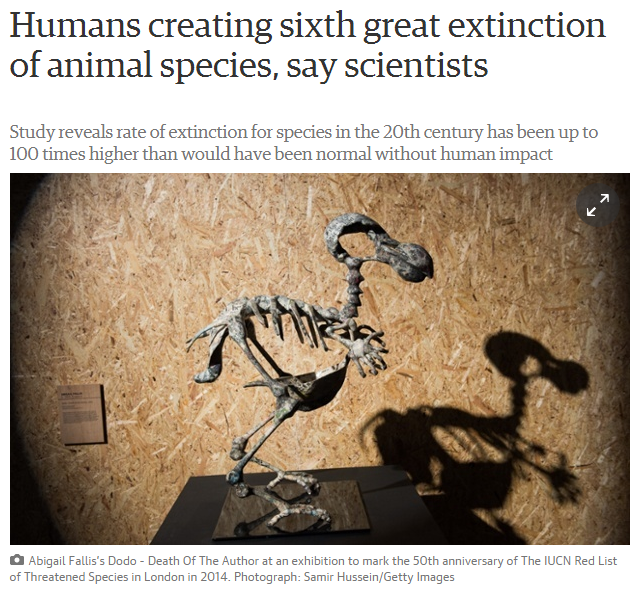
“We are living in the middle of a mass extinction today, but none of us feel that urgency, or that it really is so.”
-- Dr. Gerta Keller, Princeton University

Sudan, the last of his Rhino kind

The 8 Million+ Species We Don’t Know
By Edward O. Wilson
March 3, 2018 / New York Times
https://www.nytimes.com/2018/03/03/opinion/sunday/species-conservation-extinction.html
The most striking fact about the living environment may be how little we know about it. Even the number of living species can be only roughly calculated. A widely accepted estimate by scientists puts the number at about 10 million. In contrast, those formally described, classified and given two-part Latinized names (Homo sapiens for humans, for example) number slightly more than two million. With only about 20 percent of its species known and 80 percent undiscovered, it is fair to call Earth a little-known planet.
- To effectively manage protected habitats, we must also learn more about all the species of our planet and their interactions within ecosystems.
The best-explored groups of organisms are the vertebrates (mammals, birds, reptiles, amphibians, fishes), along with plants, especially trees and shrubs. Being conspicuous, they are what we familiarly call “wildlife.” A great majority of other species, however, are by far also the most abundant. I like to call them “the little things that run the world.” They teem everywhere, in great number and variety in and on all plants, throughout the soil at our feet and in the air around us. They are the protists, fungi, insects, crustaceans, spiders, pauropods, centipedes, mites, nematodes and legions of others whose scientific names are seldom heard by the bulk of humanity. In the sea and along its shores swarm organisms of the other living world — marine diatoms, crustaceans, ascidians, sea hares, priapulids, coral, loriciferans and on through the still mostly unfilled encyclopedia of life.
Do not call these organisms “bugs” or “critters.” They too are wildlife. Let us learn their correct names and care about their safety. Their existence makes possible our own. We are wholly dependent on them.

·······························
Phytoplankton & Photosynthesis

Plankton: The Ocean Food Chain & Atmospheric Oxygen

"Tiny Blue Green"
- More than Meets the Eye
"A single kind of blue-green algae in the ocean produces the oxygen in one of every five breaths we take"
- ~ from "The World Is Blue: How Our Fate and the Ocean’s Are One" by Sylvia Earle

Visit the 'tiny little unseen ones' @GreenPolicy360

Seventy percent of the Earth's surface is ocean and here,
in myriad life forms, "tiny blue-green" organisms are essential to preserving life on the planet
producing in their photosynthesis vast quantities of life-enabling oxygen in our atmosphere...
and the 'tiny life' support all life, as we consider Earth Day and an All Species Day

○
The Unseen and the Seen
- Preserving & Protecting Life on Earth
Planet Citizen Vision of Living Earth
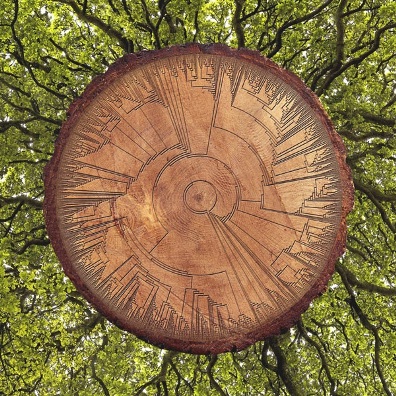
🌎
File history
Click on a date/time to view the file as it appeared at that time.
| Date/Time | Thumbnail | Dimensions | User | Comment | |
|---|---|---|---|---|---|
| current | 22:24, 30 January 2017 | | 325 × 385 (34 KB) | Siterunner (talk | contribs) |
You cannot overwrite this file.
File usage
The following 59 pages use this file:
- About Us
- Anthropocene
- Bioneers
- Book Reviews @GreenPolicy
- Earth and Space, Politics
- Eco-economic Decoupling
- Environmental Justice
- Environmental agreements
- Ethics and Climate Change
- Generation Green
- GreenPolicy360 (eOS)
- GreenPolicy360 Archive Highlights 2023
- GreenPolicy360 Archive Highlights 2024
- Green New Deal
- Green Politics 360
- Green Quotes
- Greening Our Blue Planet
- Net Zero Energy Policy
- PlanetCitizen
- Planet Citizen Action
- Planet Citizens
- Planet Citizens, Planet Scientists
- Siterunner
- Steven Schmidt
- Thank You Generation Green
- The Commons
- Virtual Earth
- User talk:Siterunner
- Green Policy:About
- File:Acting to make a positive difference - in St Petersburg Florida.png
- File:ClimateNews 360.jpg
- File:Earth grassroots.jpg
- File:Earth in Our Hands.png
- File:Global Stocktake, the first GST.jpg
- File:Green Wave.png
- File:Helene and Milton 2024.jpeg
- File:How satellites monitor climate change circa 2016.png
- File:Last of its kind.jpg
- File:On the road sjs.jpg
- File:Rep George Brown and Steve Schmidt - Oct 15, 1969 - 448x305.png
- File:The biggest science cut in NASA history.jpg
- File:Tree of Life on Hand.jpg
- File:Usable climate science is adaptation science-Adam Sobel May 2021.jpg
- Category:About Us
- Category:Anthropocene
- Category:Biodiversity
- Category:Biosphere
- Category:Climate Policy
- Category:Earth Observations
- Category:Eco-Quotes
- Category:Eco-Spirituality
- Category:Eco-ethics
- Category:Energy Policy
- Category:GreenPolicy360
- Category:Green Politics
- Category:INDC
- Category:NASA
- Category:Planet Citizens, Planet Scientists
- Category:Sustainability


- About Us
- Anthropocene
- Atmospheric Science
- Biodiversity
- Biosphere
- Citizen Science
- Climate Change
- Climate Policy
- Democracy
- Earth Science
- Earth System Science
- Earth360
- EarthPOV
- Eco-ethics
- Ecology Studies
- Education
- Economic Justice
- Endangered Species
- Environmental Movement
- Environmental Protection
- Environmental Security, National Security
- Extinction
- Global Security
- Global Warming
- Green Graphics
- Green Networking
- GreenPolicy360
- Green Politics
- Green Values
- Human Rights
- New Definitions of National Security
- Nuclear Nonproliferation
- Ocean Science
- Peace
- Planet Citizen
- Planet Citizens
- Planet Citizens, Planet Scientists
- Resilience
- Rights of Nature
- Seventh Generation Sustainability
- Social Justice
- Strategic Demands
- Whole Earth
- Wildlife
- Youth